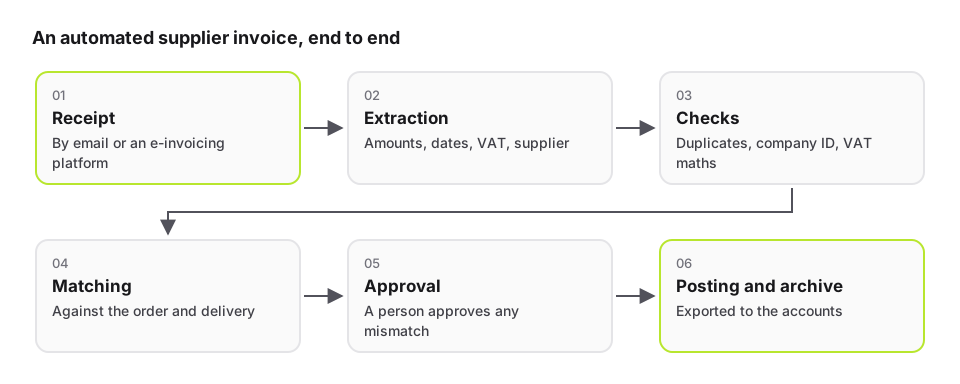
Automating supplier invoices means chaining receipt, data extraction, checks, matching against the order, approval and posting to the accounts, with no retyping. AI reads the invoices; a person stays in charge of mismatches and payment. France's rollout of mandatory e-invoicing between businesses, which began on 1 September 2026, makes this data more structured and easier to process.
Why automate supplier invoice processing?
Every supplier invoice follows the same path: someone receives it, reads it, checks the amounts, finds the order, gets it approved, posts it to the accounts and files it. The work is repetitive, prone to typing errors, and lends itself to automation because its rules are clear.
The goal is not to pay without looking, but for the team to handle by hand only what deserves its attention: mismatches, disputes and new suppliers.
Which steps can be automated?
Nearly all of them, with a person approving at the right point:
- Receipt: collect invoices from a dedicated mailbox or an approved e-invoicing platform
- Extraction: read the supplier, amounts, VAT, dates and references
- Checks: duplicates, company ID, VAT math, known bank details
- Matching: compare with the order and the delivery note
- Approval: send anything that does not match to the right manager
- Posting and archiving: export to the accounting software and file the document
How does AI read an invoice?
A language model, or a document recognition tool, reads the invoice, whether PDF or scanned, and extracts the useful fields in a structured format. It copes with layouts that differ from one supplier to the next, where older tools needed a template per supplier.
Extraction is never perfect. So automatic checks run after reading, and anything that fails them goes to a person for approval instead of being posted.
Which tools can automate invoices?
Your accounting software may already cover part of the path. An automation tool such as n8n then connects your mailbox, the e-invoicing platform, the purchasing software and the accounts, with an AI step for extraction. For high volumes or complex approval rules, custom development takes over.
What does mandatory e-invoicing change?
According to impots.gouv.fr, the French tax authority's site, e-invoicing between businesses and the transmission of data to the administration have been in effect since 1 September 2026. Invoices pass through approved platforms, whose list the administration publishes.
According to Service Public Entreprendre, the new mandatory invoice details that come with e-invoicing, such as the customer's SIREN company number, apply first to large and mid-sized companies, then to SMEs and micro-businesses from 1 September 2027.
For automation, this is good news: an electronic invoice arrives with structured data, which makes extraction simpler. Checks, matching and approval still need organizing.
Where should you start?
First measure the number of invoices per month and the time spent at each step. Start with extraction and checks, with a person approving everything at first, then limit approval to mismatches once the results are reliable. Always keep a person authorizing payments.
Key takeaways
- Receipt, extraction, checks, matching, approval, posting: all chained, no retyping
- AI reads the invoices; automatic checks catch its mistakes
- A person handles mismatches and authorizes payments
- E-invoicing, phased in across France from September 2026, structures the data upstream
FAQ
Can AI pay invoices on its own?
Technically yes, but we advise against it. Automate reading, checks and matching, and keep a person authorizing payments and handling mismatches.
Do we need to change accounting software?
Rarely. The automation plugs into your existing software, through its API or file imports, and into the e-invoicing platform you use.
Does e-invoicing make automation pointless?
No. It structures the data on receipt, but checks, matching against orders, approval and posting still need organizing.
When does e-invoicing apply to SMEs in France?
According to Service Public Entreprendre, the new mandatory invoice details apply to SMEs and micro-businesses from 1 September 2027, after large and mid-sized companies. For your own dates to receive and issue e-invoices, check the reform calendar on impots.gouv.fr.
Sources
- impots.gouv.fr: Je passe à la facturation électronique (accessed September 29, 2026)
- Service Public Entreprendre: Mentions obligatoires sur une facture (accessed September 29, 2026)